Does stress cause neck pain? The short answer is no! At Performance Physical Therapy, we like to say “contributes to” instead of “causes.” The casual way healthcare professionals throw around terms can lead to confusion and, worse still, ineffective treatment. Fortunately, our highly skilled therapists know how to dig deep and find the root cause of your neck pain, and this information helps you find relief!
Let’s discuss Nicole, a 40-something-year-old working mother of three. Nicole was used to being very active, balancing her work schedule with getting her kids to all the various activities and school functions that come with being a mom nowadays.
Her neck pain first started as a crick in the neck when she woke up one morning. As the day progressed from driving her kids around to sitting at her desk, she noticed that turning her head became more difficult and painful, making focusing on work nearly impossible.
Nicole struggled to figure out why her neck started hurting and came to the conclusion that stress “must be” the culprit. The more pain and difficulty moving she had, the more convinced she was that stress was to blame.
Understanding Nicole’s Neck Pain
One of the most common things we hear from our patients is that their pain started for “no apparent reason.” Like Nicole, people will wake up with a crick in their neck or notice a stiffness turning when driving in the car. It is also common for people to notice tightness in their upper back and neck after a long day.
So, what is actually the source of the pain? In most cases, there is an issue with the neck joints or the neck muscles due to prolonged positions. Our neck joints don’t like remaining in any position for extended periods. In Nicole’s case, she first noticed her pain in the morning, which may have been related to her neck position while sleeping. It is also important to note that in Nicole’s case, the first sign of any issue was in the morning when she woke up, unrelated to stress.
As Nicole’s day progressed, her pain got worse. But this also was more likely related to how she held her neck while driving or sitting at her computer. In both cases, her posture, specifically how she held her neck, seems to have contributed to her pain. Prolonged sitting can lead to a forward head position, resulting in tension to soft tissue (i.e., muscles, tendons, and ligaments) or negative changes to our blood flow.
The muscles of our neck function best when we move them. So, holding her head in one position likely led to irritation of the muscles and affected her ability to move her neck, which in turn caused stress.
Stress “contributes” to neck pain because, when we experience stress, our bodies naturally respond by tensing up as a protective measure. This tension can lead to discomfort, particularly in the neck and upper back region. Research studies have found that individuals with higher stress levels reported increased neck pain as compared to those with lower stress levels. This is why we say “contributes” to, but not the cause of, neck pain.
How Physical Therapy Can Help Alleviate Neck Pain
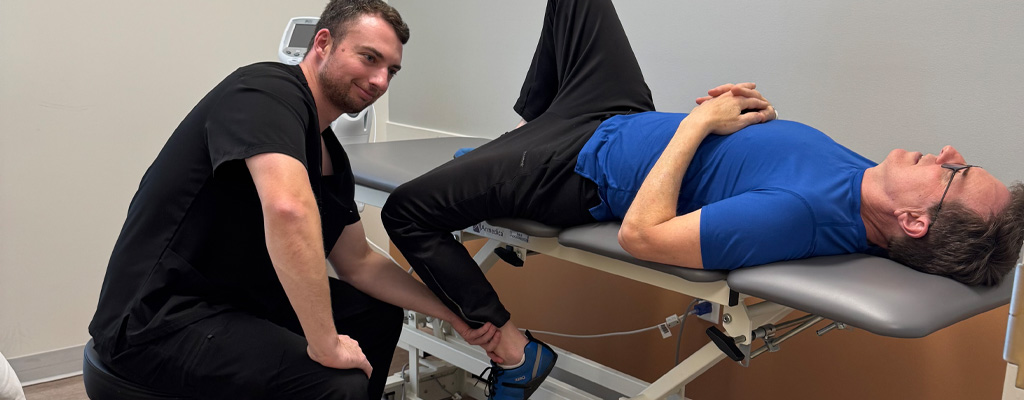
We will target the source of your pain by performing a thorough examination, starting with your medical history and details about how, when, and where your symptoms began. As we saw with Nicole, determining how, when, and why the pain started helps us eliminate possibilities and get to the actual root cause(s).
Our therapists will also analyze your posture and movement to identify any limitations or restrictions contributing to your condition. We’ll use this information to design a program that addresses your specific needs.
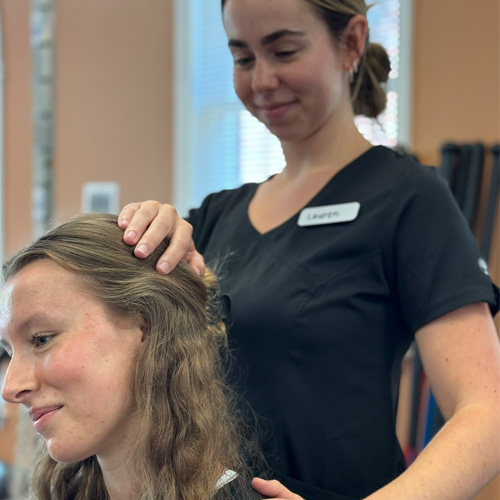
Our treatment plans focus on relieving your pain and improving your posture, mobility, strength, etc., and educating you about managing your symptoms. Your program will likely include manual therapy (i.e., soft tissue work and/or joint mobilizations), targeted stretches, exercises, activity modification, or posture recommendations.
We’ll listen to your unique situation and specific issues and then work to help you find relief and get back to your normal routine.

Book Your Appointment Today!
If you’re dealing with neck pain or looking for someone to help you figure out what is causing your issues, call us today and set up a consultation!

Your Success Is Our Priority!
Return to Performance Physical Therapy and Let’s Continue Your Journey to Wellness Together. Schedule Your Appointment Now!
Separating Muscle and Joint Pain: The Key to Lasting Results
Do you notice tightness in your upper back and neck? Is it more tight on one side than on the other? The location and characteristics of your neck pain are valuable clues for our skilled McKenzie trained therapists at Performance Physical Therapy to identify the likely culprit for your pain, which helps us guide you to lasting relief. Ready to unlock the secret to lasting relief from neck and upper back pain? Don’t ignore those subtle signs — reach out to our skilled physical therapists today, and let us help you resolve your pain once and for all!

Neck Pain — Muscle vs. Joint
It can be difficult for people to determine where their pain originates. One of the most common reasons people describe their pain is “no apparent reason.” It often seems to come out of the blue or while doing the same everyday things you usually do.
You can use these clues to point you in the right direction:
These clues can help us determine what is causing your pain, but the best way to get lasting relief is to schedule an appointment with one of our McKenzie therapists!

Staff Spotlight: Cody-Reynolds
Cody was born and raised in Newark, Delaware and proudly served five years in the Marine Corps. After completing his service, Cody attended the University of North Carolina Wilmington, where he earned his bachelor’s degree in Exercise Science. Cody then pursued his passion for healthcare by attending the University of Delaware for his Doctorate of Physical Therapy. Outside of work Cody enjoys golfing, fishing, and staying active through regular workouts. Cody looks forward to working closely with patients to help them reach their goals.
Follow Us on Social Media!


Packed with savory flavor, this sun-dried tomato focaccia turkey sandwich layers tender turkey with rich, herby notes for a truly satisfying bite. It’s the perfect balance of hearty and fresh, making it a delicious go-to for lunch or a quick, elevated meal.
Enjoy This Seasonal Healthy Recipe!
Sun-Dried Tomato Focaccia Turkey Sandwich
- 1 loaf of Trader Joe’s sun-dried tomato focaccia
- one 7-ounce package deli turkey
- 1 large tomato, thinly sliced
- one handful of greens – sprouts, microgreens, spinach, etc.
- a few pieces of thinly sliced red onion
- 1/4 cup mayo
- 1/4 cup pesto
Preheat the oven to 400 degrees. Toast the focaccia in the oven for 5-8 minutes. Mix the pesto and the mayo together in a small bowl to make a pesto mayo. Keeping the bread flat on a cutting board, turn your serrated knife sideways and slice horizontally through the center of the loaf. (You don’t want to flip the top and lose those yummy crumbles.) Keeping the top piece flat, set it aside. Layer the sandwich with pesto mayo, turkey, tomato, greens, red onion, and finish with dollops of pesto mayo. Dollop the top layer of pesto mayo directly on top of the greens and onions so you don’t have to flip the top piece upside down to spread it on the bread.
Gently press your top piece back on top of the sandwich. When it’s nice and secure, use a large knife to cut through the sandwich. Cut it down the middle and across 3 times for a total of 6 pieces. Serve and enjoy! This is sandwich goals.
Simple Tricks to END Your Neck Pain Soreness!
What Makes Performance Physical Therapy Unique?
From your first appointment, you will see that our practice is built around a more personal standard of care. Every visit takes place in a private treatment room, allowing your provider to focus fully on you without distractions. With the most 5-star Google reviews of any practice in Delaware, our reputation reflects the trust and results our patients experience every day. Locally owned and not part of a franchise, Performance PT is deeply connected to the community we serve and committed to care that feels both individualized and genuine.
Patient Success
“As a retired PT, I always rely on PPT first to provide the expertise that I can’t give myself. Most recently, I worked with Cody Reynolds, PT, DPT, and the staff. Cody and the staff were very professional and personable throughout my treatment plan. Cody was very thorough both during the evaluation and throughout treatment. At each treatment session, he asked if I had questions and, more importantly, he listened very well. We developed a good team approach to work through the issues, but he was the Captain. Cody is relatively new to this wonderful profession. His excellent skills, problem-solving abilities, and empathy give him a foundation for a great career. I am very grateful to the team, and I highly recommend Cody if you need a PT.”
-David H.

How To Have a Great Summer–PT Style!
The days are getting longer, the air is getting warmer, and school is winding down. That means one thing: summer is on its way! Here are some tips to ensure a healthy summer for you and your family:
- Drink plenty of water. While you should strive to stay hydrated all year round, it’s particularly important in warmer weather.
- Ease back into summer activities gradually. Whether you’re hitting the pool more frequently or taking more evening walks thanks to the later sunsets, avoid doing too much too soon. Start slow, don’t push too hard, and remember to warm up first.
- Don’t skip your PT sessions. We know summer’s busy. But keeping up with your physical therapy will help you stay active and pain-free throughout the season–and beyond!
Ready to make the most of the summer months? Schedule an appointment with Performance Physical Therapy today!

May Word Scramble
edaldnnoi
nhiigfs
uuasrt
prsnig
eskbta
lveendar
Answer Key
dandelion
fishing
taurus
spring
basket
lavender